Thursday, 4 April 2013

XCARET PARK - MEXICO


Xcaret Park  is a privately owned and operated theme park, resort and self-described ecotourism development located in the Riviera Maya, a portion of the Caribbean coastline of Mexico's state that has been designated as a zone for tourism development. It is situated approximately 75 kilometres south of Cancun. It is named after the nearby archaeological site Xcaret, a settlement constructed by the pre-Columbian Maya some of whose structures lie within the boundaries of the park's 81 hectares of land holdings.


The nature-based attractions of the park include :

Manatee Lagoon


Manatees in Mexico are mammals of the Sirenia order that live mainly in lagoons and mangroves, and are peaceful beings that swim very slowly up to 4 miles per hour in groups of 2 to 4 animals. The same as herbivorous mammals, manatees search for plants, algae and grass that grow under the warm waters of the Gulf of Mexico and the Caribbean.


Swimming with Dolphins, Sea Trek and Snuba


Xcaret Sea Trek is a spectacular underwater walk and a second alternative to scuba dive in the Riviera Maya where no swimming or diving experience is required.
Participants will be walking in zero gravity while surrounded by incredible aquatic life. The Sea Trek activity in Xcaret begins with a brief orientation on underwater communication as the group tries on their Sea Trek equipment that includes neoprene boots and a special space helmet that provides air, weight and stability to walk upright under the water.


Coral Reef Aquarium  


More than 500 corals have been planted successfully at Xcaret's Coral Reef Aquarium on the artificial reef structures.
 The marine exhibit at the Coral Reef Aquarium at Xcaret includes more than 5,000 living organisms including tropical fish such as surgeons, butterfly and angel fish, as well as
sea horses, urchins, anemones, crabs, lobsters, nursery sharks and rays.


Bird pavilion 


Here you will see an area of reproduction and exhibition of birds natural to the region. Over 30 species are found here.


 Underground Rivers


Designed by nature and enhanced by man you will enter the 530-meter subterranean river and float downstream. With natural skylights in the jungle above to light the way, you must swim here while at XCARET. 


Butterfly Pavilion


XCARET has one of the largest butterfly pavilions in the world. The objective is to breed and reproduce butterflies in danger of becoming extinct. The "larva factory" is where you will see all the stages in a butterfly's life, the eggs, the larvae, the cocoon, and finally the butterfly. With a little luck see butterflies coming out of the cocoon and entering the world. The best time to visit the open-air butterfly pavilion is in the morning, because the butterflies are more active as they prefer to fly when it is cooler. 


 Bat Cave


At the end of the lagoon you will find a bat cave home to the two kinds of bats that inhabit the area. There are insect eating bats that are great at controlling the fly and mosquito population in the Yucatan and fruit eating bats that are responsible for spreading the seeds of local fruit trees that grow wild in the Yucatan area. 


Jaguars and Puma Island


The Jaguar was one of the most important symbols to the Maya. All the mammals that you see in XCARET will appear not to be in cages. The Jaguars and Pumas are in their natural environment and on an island surrounded by a deep ravine full of water. Xcaret has been very successful at breeding these beautiful symbols of the Yucatan peninsula.


Crocodile Lagoon


For more than 140 million years crocodiles have been the terror of lagoons and rivers in the tropical zones. Even though they are cold blooded and spend a lot of time warming themselves in the sun, they are very agile and speedy hunters when stalking and attacking prey. See these ancient egg laying monsters in their natural environment.  


Retrieved from : http://www.tours-cancun.com/mayanriviera/xcaret.php  
                              http://en.wikipedia.org/wiki/Xcaret_Park 

SAN DIEGO ZOO - CALIFORNIA


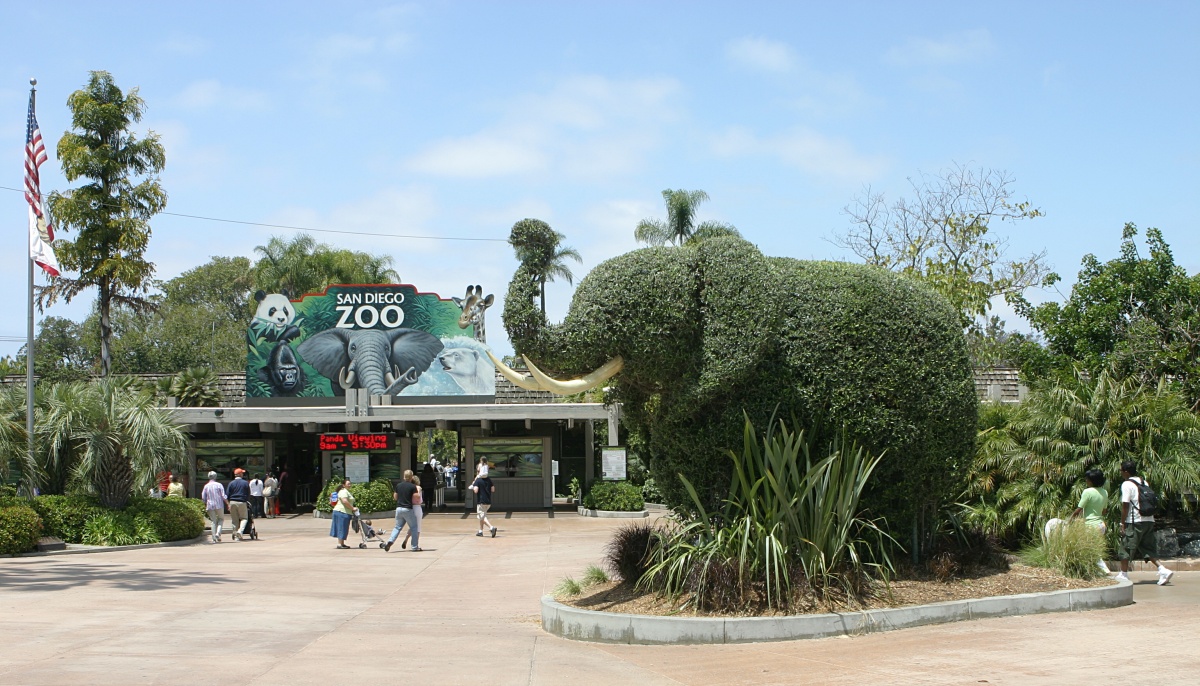
The San Diego Zoo is a zoo in Balboa Park, San Diego, California housing over 3,700 animals of more than 650 species and subspecies. It is also one of the few zoos in the world that houses the giant panda.
It is privately operated by the nonprofit Zoological Society of San Diego on 100 acres  of parkland leased from the City of San Diego, and ownership of all animals, equipment and other assets rests with the City of San Diego.

 There are many interesting exhibit in this zoo, such as :

Panda Trek


 The San Diego Zoo is one of four zoos in the U.S. which have giant pandas on display, and is the most successful in terms of panda reproduction. The first two giant panda cubs in U.S. history to have been born in the U.S. and survive into adulthood, Hua Mei (female, born to Bai Yun and Shi Shi) and Mei Sheng (male, born to Bai Yun and Gao Gao). In addition to being able to view this rare animal species, the nearby Giant Panda Discovery Center has interactive exhibits that let the visitor experience first hand what the animals smell and sound like. 


Ituri Forest


This exhibit houses different animal species from the forests of Africa. Animals such as Allen's swamp monkeys, lesser spot-nosed guenons, spotted-necked otters, a red river hog, and an African forest buffalo can be found coexisting within the exhibit. Some of Ituri Forest's most prominent inhabitants exist within the hippo exhibit, which includes an underwater viewing area and several species of exotic fish, such as tilapia. One can also see the colorful turacos.


Bonobos


 The zoo has bred and maintained bonobos since 1960.


Tiger River


 Tiger River, located in a sloping canyon, opened in 1988 and houses Malayan tigers. From the top of the canyon, the path first goes through a pavilion with underwater viewing of crocodiles and other aquatic reptiles. 


Sun Bear Forest


This exhibit opened in 1989 and exhibits Malayan sun bears and silvery lutung monkeys. One end of the 1.5-acre  complex houses lion-tailed macaques in a grassy exhibit with a stream and climbing ropes. The oblong sun bear exhibit straddles the path along the rest of the complex, and a couple of small aviaries house fifteen species of birds, including fairy bluebird and fruit doves.


Scripps Aviary


The Scripps Aviary is home to many colorful birds such as the amethyst starling, tinkerbirds, and the sociable weaver.


Elephant Odyssey


The main feature of the exhibit is the 2.5-acre  elephant habitat—more than three times the size of the Zoo's former elephant exhibit, in what used to be Elephant Mesa (now the "Urban Jungle"). Elephant Odyssey also features a glimpse of the past with the Fossil Portal and life-size statues of ancient creatures of Southern California next to the exhibits of their modern-day counterparts.


Retrieved from : http://en.wikipedia.org/wiki/San_Diego_Zoo
                              http://www.balboapark.org/in-the-park/san-diego-zoo 
 

BACONAO PARK - CUBA


Baconao Park is a large park region, located about 20 kilometers away from the city of Santiago de Cuba.
The name Baconao is related to the name of a little native that lived in the south of Cuba during the pre-Columbian period. Legend mentions a magical tree, called bacona, that allowed the kid to play music from the lagoon's snails.


The park contains a variety of attractions beside wildlife refuges and coffee plantations.


Great Rock (Gran Piedra)


The Great Rock is a large rock of volcanic origin, measuring 51 m  long, 25 m high, and 30 m  wide. Its estimated weight is more than 63 thousand tons.
It is possible to climb 459 stone steps to the summit of the rock, and stand 1,234 meters above sea level for a panoramic view. It is said that on a dark night one can see the lights of Jamaica.


Prehistoric Valley


In the Valle de la Prehistoria visitors encounter dozens of life-size model dinosaurs sculpted in stone and other prehistoric creatures lurking in lush vegetation.


Farm (Granjita Siboney)
 
 
The farm is the place where the attackers of the Moncada Barracks (Cuartel Moncada) led by Fidel Castro, spent the night prior to the attack on July 26, 1953.


Botanical Garden


There is also a 0.45 km2 garden, called Jardin Ave de Paraiso, dating from 1860, that was laid out on a former coffee plantation and features a series of colour-coded gardens with unique scents and displays in each.


Museum of History of Terrestrial Transport


The museum displays over 2,500 small-scale car replicas.

Aquarium


The aquarium is 30 m deep, and has a submarine tunnel, and a Dolphinarium.


Baconao Lagoon


The lagoon has an area of 4 km2. There is also a reproduction of a Taíno Village, and a restaurant specialized in seafood.


Retrieved from : http://en.wikipedia.org/wiki/Baconao
                              http://www.atlasobscura.com/places/el-valle-de-la-prehistoria

Tuesday, 2 April 2013

UNIVERSAL STUDIO - JAPAN


Universal Studios Japan was the first theme park under the Universal Studios brand to be built in Asia. Opened in March 2001 in the Osaka Bay Area, the theme park occupies an area of 39 hectares and is the most visited amusement park in Japan after Tokyo Disney Resort. Universal Studios Japan reached the milestone of attracting the first 10 million visitors faster than any other theme park in the world.

Universal Studios Japan currently has eight sections. Visitors are able to enjoy many amusement rides, ranging from child-friendly carousels to thrilling roller coasters and simulators, based on popular movies such as Spiderman, Back to the Future, Terminator 2 and Jurassic Park.

New York


The Amazing Adventures of Spider-Man - The Ride 


The attraction is a hybrid ride combining special roving motion vehicles with 3-D projection, elaborate physical sets, and both practical and tactile effects.


Terminator 2:3-D 


 The show is presented in two parts; a pre-show where a Cyberdyne Systems company hostess shows guests a brief video presentation about the company's innovations, and the main show, where live performers interact with a 3-D film.


Hollywood


 Hollywood Dream - The Ride 


Hollywood Dream --> The Ride is a roller coaster located at Universal Studios Japan. It has a built-in sound system located in the headrest. Riders can choose one of a number of songs to hear during the course of the ride by pressing one of the five labeled buttons on their lap bar.


 Space Fantasy: The Ride 


Space Fantasy: The Ride  is a steel roller coaster at Universal Studios Japan in Osaka, Japan.


 San Francisco


           Back to the Future - The Ride 


Back to the Future: The Ride is a simulator ride based on and inspired by the Back to the Future film series and is a mini-sequel to 1990's Back to the Future Part III.

The ride story centers on a first-person adventure through time, in pursuit of Biff Tannen, the trilogy's villain. Steven Spielberg, executive producer of the movie series served as creative consultant for the ride.


                            Backdraft 


Backdraft is a fire special effects show at Universal Studios Japan, and formerly Universal Studios Hollywood theme park. The show is based on the film of the same name. Visitors can learn how the pyrotechnic effects were created and experience some of them first hand.

The Hollywood attraction was supposed to officially close after Labor Day 2009 to be replaced by Transformers: The Ride in 2011 but remained open to appease the temporary closures of other attractions for annual refurbishment. The Hollywood attraction officially closed on April 11, 2010. The attraction remains part of the Osaka park.


Jurassic Park

 
Jurassic Park: The Ride 


  Jurassic Park: The Ride is a water-based amusement ride that is based on Steven Spielberg's hit film Jurassic Park and Michael Crichton's novel located at Universal Studios Japan. This ride is a duplicate of the original Jurassic Park: The Ride at Universal Studios Hollywood. Another duplicate exists at Islands of Adventure. This version of the ride is located within an entire Jurassic Park themed section of the park with themed food venues, buildings, and vehicles.


Snoopy Studios
 

   Snoopy's Great Race 


  One of the attractions at Snoopy Studios, an indoor themed area of Universal Studios Japan theme park. Snoopy's Great Race is an elaborately themed junior roller coaster for the entire family.


Lagoon 

Peter Pan's Neverland

The tales of Peter Pan and Neverland have been lovingly told and retold, staged and re staged in a variety of formats – theater,cinema, puppetry, literature, cartoon. The fresh and lavishly staged live stunt production at Universal Studios Japan. 


Water World


Waterworld: A Live Sea War Spectacular 


The show is 16 minutes long and includes stunts on water, land, and overhead, supported by many pyrotechnic, flame, water, and other special effects, including the explosive crash landing of the seaplane (referred to as a "Skyboat" by the Deacon). The stunt-show's unique soundtrack was crafted from snips from the movie score.
The seating is in three sections of arena seating. The front seats are the "Soak Zones", which are the target of splashes from the Jet-Skis and various wet special effects.


Retrieved from : http://en.wikipedia.org/wiki/Universal_Studios_Japan
                              http://www.japan-guide.com/e/e4021.html